
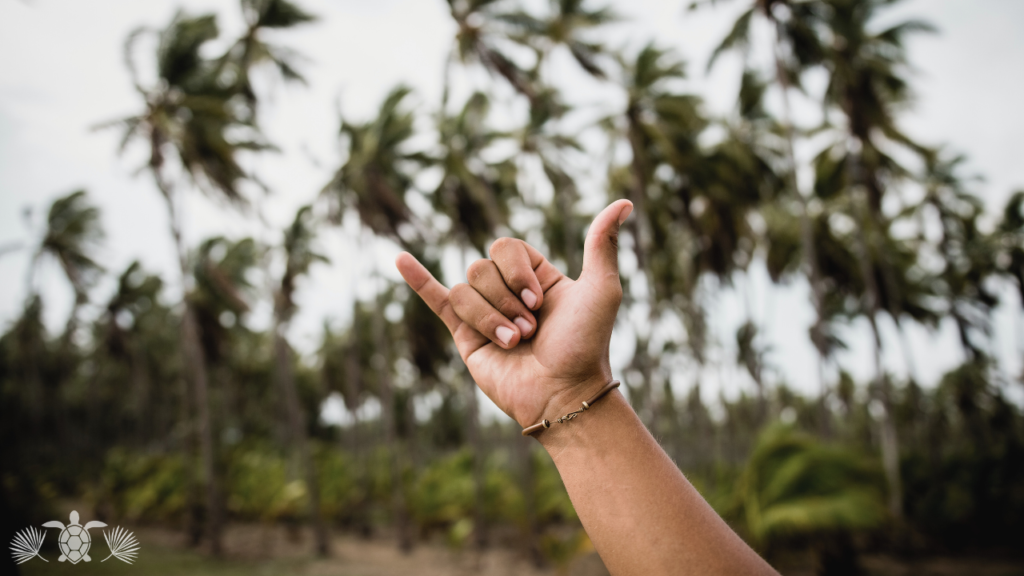
When people think of Hawaii, they often picture palm trees, surfboards, and someone flashing the Shaka hand gesture. But on the Big Island — from Kona to Captain Cook, from Waimea to Hilo — the shaka is far more than a casual sign. It represents warmth, patience, respect, and community.
For those considering a move to Hawaii, understanding the deeper meaning of the Shaka hand gesture offers powerful insight into what daily life truly feels like here. It’s not just a symbol — it’s a reflection of the island’s values and the spirit that makes the Big Island such a special place to call home.
What Is the Shaka Hand Gesture?
The Shaka hand gesture is simple and instantly recognizable: extend your thumb and pinky finger while curling the three middle fingers inward. Give it a relaxed shake, and you’ve just communicated something uniquely Hawaiian.
But what does the shaka mean?
The shaka hand gesture meaning can vary slightly depending on context, but it generally expresses:
-
Hello
-
Thank you
-
All good
-
Hang loose
-
Right on
-
See you later
It’s informal, friendly, and easy. That simplicity is part of its charm.
Over time, the Shaka hand gesture has become globally recognized through surf culture, tourism, and media. You’ll see it in advertisements, social media posts, and even professional settings. Yet here on the Big Island, its meaning goes deeper than a greeting — it reflects a way of life grounded in aloha.

The History & Cultural Roots of the Shaka
Like many cultural traditions, the origin of the Shaka hand gesture is rooted in local storytelling. One of the most well-known accounts traces the gesture to Hamana Kalili, a Hawaiian sugar mill worker who lost his three middle fingers in an accident. Children would imitate his hand shape, and over time, the gesture became part of local culture.
Whether legend or literal history, what matters most is how the shaka became woven into everyday Hawaii life.
By the mid-20th century, it was commonly used across the islands — in surf culture, in small-town communities, and among neighbors. It symbolized friendliness and mutual understanding. Eventually, the State of Hawaii officially recognized the Shaka hand gesture as a cultural icon — a powerful acknowledgment of its importance.
The shaka reflects Hawaii’s identity: welcoming, relaxed, and community-focused.
For buyers considering homes in Kona, Captain Cook, or even Kohala, this isn’t just trivia — it’s insight into the social fabric of the place you’re entering.
The Aloha Spirit Behind the Gesture
To understand the Shaka hand gesture, you must understand aloha.
Aloha is often translated as “hello” or “goodbye,” but in reality, it represents a philosophy — a way of treating others with kindness, patience, respect, and compassion.
The values reflected in the shaka include:
-
Kindness – Treating others with warmth
-
Patience – Embracing the island pace
-
Community – Looking out for neighbors
-
Respect – Honoring land, culture, and people
-
Inclusivity – Welcoming others with openness
On the Big Island, these values shape daily life.
In Kona, drivers wave you through traffic with a shaka. In Captain Cook, neighbors greet each other from their lanais. In Waimea, ranching families and new residents alike share space with mutual respect. In Hilo, farmers markets and local events foster connection.
The Shaka hand gesture becomes a daily reminder: slow down, be kind, stay grounded.

How the Shaka Reflects Big Island Community Life
When people relocate to the Big Island, they often comment on one thing first — how welcoming it feels.
That sense of belonging is embodied in the Shaka hand gesture.
Here’s how it shows up in everyday life:
Neighbors Wave as You Drive By
In neighborhoods across Kona and Captain Cook, it’s common to exchange a shaka while passing by. It’s a simple acknowledgment: “I see you. We’re neighbors.”
Farmers Markets & Local Gatherings
Whether at the Keauhou Farmers Market or a gathering in South Kona, community matters. Vendors know their customers. Conversations happen naturally.
A Slower Pace
Island time isn’t about laziness — it’s about intentional living. The shaka reminds people not to rush unnecessarily.
Strong Mutual Support
From sharing fruit from backyard mango trees to helping with small projects, there’s a sense of reciprocity.
Newcomers often feel welcomed precisely because of this openness. But it works best when approached with humility and respect.
The Shaka hand gesture meaning isn’t superficial — it’s relational.
What the Shaka Means for Big Island Home Buyers
Here’s where lifestyle meets real estate.
Buying a home on the Big Island isn’t just a transaction — it’s an entry into community. Whether you’re purchasing in Kona, Captain Cook, Waikoloa, or Kohala, you’re not just acquiring property; you’re joining a neighborhood.
Understanding the Shaka hand gesture helps buyers transition more smoothly.
Relationships Matter in Island Real Estate
Island real estate is relationship-driven. Contractors, inspectors, lenders, and escrow officers often work together repeatedly. Respect and clear communication go a long way.
Cultural Awareness Builds Trust
Buyers who appreciate local customs — including the spirit behind the shaka — often integrate more comfortably.
It’s More Than Ocean Views
While Big Island homes offer incredible natural beauty, long-term satisfaction comes from feeling connected.
There’s a difference between buying property and embracing lifestyle.
When you move here, you’re choosing:
-
Community over anonymity
-
Connection over convenience
-
Meaning over momentum
The Shaka hand gesture quietly communicates all of that.

Embracing the Shaka Spirit When Moving to Hawaii
If you’re relocating to Kona, Captain Cook, or elsewhere on the Big Island, here are ways to embrace the spirit behind the gesture:
Show Appreciation for Local Culture
Learn about the island’s history. Respect land traditions and native practices.
Participate in Community Events
Attend local markets, beach clean-ups, and small gatherings.
Approach Island Life with Patience
Shipping delays, slower service, and different pacing are normal. Adapt with grace.
Build Genuine Relationships
Get to know neighbors. Support local businesses.
Live with Aloha — Not Just Visit With It
Tourism and residency are different experiences. When you live here, you contribute to the community.
Buying on the Big Island isn’t just about square footage or ocean views — it’s about belonging.
The Shaka hand gesture is a daily reminder of that belonging.
Final Thoughts: More Than a Symbol
The Shaka hand gesture may look simple — thumb and pinky extended — but its meaning runs deep.
It represents:
-
Warmth
-
Mutual respect
-
Slower living
-
Community connection
-
Shared responsibility
When you understand the shaka hand gesture meaning, you begin to understand why life on the Big Island feels different.
Whether you’re exploring homes in Kona, considering acreage in Captain Cook, or looking at ranch properties near Waimea, remember: real estate here is about lifestyle.
And lifestyle here is about aloha.
If you’re thinking about making the Big Island your home — not just a destination — I’d love to help guide you through that journey.
Relevant Articles
Honokaa Town: Big Island Life, Small-Town Heart