
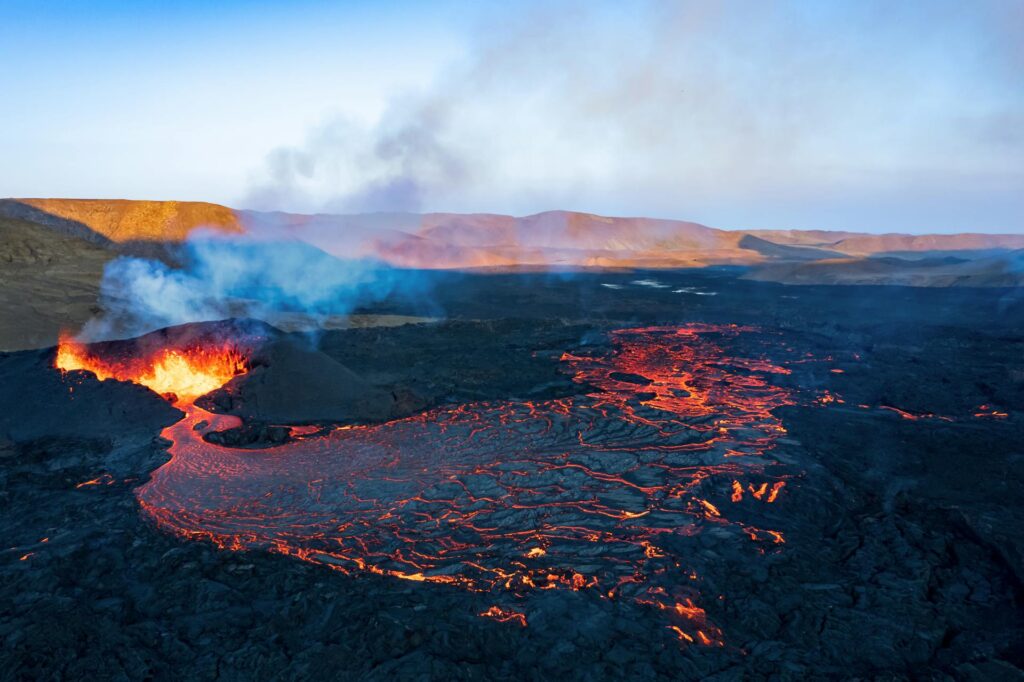
If you’re watching the news and wondering if Hawaii’s volcanic activity is causing a dip in the Hawaii real estate market—let’s set the record straight. Despite what dramatic headlines may imply, the local real estate in Hawaii remains strong, stable, and in demand.
In fact, if anything, eruptions often bring in more tourists, increase interest in short-term rentals, and spark curiosity about the island lifestyle. Here’s what buyers, investors, and future residents really need to know.
Hawaii Real Estate Market Is Still Strong
Contrary to popular belief, volcanic eruptions do not lead to widespread drops in property values across the islands. The Hawaii real estate market is deeply influenced by location, property type, and buyer demand—not fear-based news cycles.
Most eruptions occur in specific, well-monitored lava zones, primarily on the southeastern side of the Big Island—often more than a 2-hour drive (about 100+ miles) from popular west-side towns like Kailua-Kona. For example, from the current eruption zones near Kilauea to Waimea is roughly 90 miles, or around 2.5 hours of driving. To North Kohala, you’re looking at about 3 hours by car.
Meanwhile, areas like Kailua-Kona, Waimea, and North Kohala remain completely untouched by volcanic activity and continue to thrive in terms of value and demand. These areas are not only geographically distant from lava zones—they’re also protected by natural topography and decades of planning. So while the media may spotlight lava flows, the market on the western and northern coasts stays steady, competitive, and in high demand.
Contrary to popular belief, volcanic eruptions do not lead to widespread drops in property values across the islands. The Hawaii real estate market is deeply influenced by location, property type, and buyer demand—not fear-based news cycles.
Most eruptions occur in specific, well-monitored lava zones, primarily on the southeastern side of the Big Island. Meanwhile, areas like Kailua-Kona, Waimea, and North Kohala remain untouched and continue to thrive in terms of value and demand.

Hawaii Life Real Estate: Still in High Demand
The emotional draw of Hawaii is stronger than ever. People are not just buying homes—they’re buying a lifestyle. That’s why Hawaii Life Real Estate continues to see steady buyer interest, especially for ocean-view homes, off-grid properties, and income-generating vacation rentals.
After eruptions, curiosity peaks, tourists flock to see the natural event, and many decide they want to be a part of the resilient island life. Short-term rental occupancy often spikes in nearby areas, especially where visitors can witness nature’s power without being in harm’s way.
For investors, this increased demand translates to opportunity. Nightly rates in high-demand zones can range from $25 to $250+ per night depending on proximity to attractions and amenities. This means higher ROI potential for short-term rentals, particularly in regions unaffected by eruptions yet within reasonable distance of popular lava viewing areas. Pair that with Hawaii’s already strong tourism economy, and it’s easy to see why investor interest remains steady.
The emotional draw of Hawaii is stronger than ever. People are not just buying homes—they’re buying a lifestyle. That’s why Hawaii Life Real Estate continues to see steady buyer interest, especially for ocean-view homes, off-grid properties, and income-generating vacation rentals.
After eruptions, curiosity peaks, tourists flock to see the natural event, and many decide they want to be a part of the resilient island life. Short-term rental occupancy often spikes in nearby areas, especially where visitors can witness nature’s power without being in harm’s way.
Luxury Hawaii Real Estate Is Unfazed
In the world of luxury Hawaii real estate, the market is as competitive as ever. High-end buyers are still drawn to resort communities in Hualalai, Mauna Lani, and Kukio, where volcanic activity poses little to no risk. While these areas are geographically removed from active lava zones, buyers should be aware that VOG (volcanic smog) from eruptions can occasionally drift to the west side of the island depending on wind direction. This may mildly affect ocean views or sunsets on some days—but interestingly, it also increases the chances of witnessing the rare and beautiful green flash at sunset, which many consider a magical reward of island living. These buyers value privacy, views, climate, and exclusivity—and that’s something an eruption several islands away won’t diminish.
These buyers value privacy, views, climate, and exclusivity—and that’s something an eruption several islands away won’t diminish.

Real Estate for Sale in Hawaii: Still Moving
If you’re searching for real estate for sale Hawaii, you’ll find that listings in lava-free zones continue to receive strong interest. But before diving into listings, it’s important to understand something unique to the Big Island: lava zones.
Lava zones are a classification system used by the US Geological Survey to rate areas of the island by volcanic hazard risk, on a scale of 1 to 9:
-
Zone 1 is the highest risk, typically where lava has erupted most frequently (like near Kilauea).
-
Zone 9 is the lowest risk, found in areas that haven’t seen lava flow in thousands of years.
For example, Hilo and Puna have areas in Zones 1 and 2, where lava activity has occurred in recent decades. In contrast, areas like Kailua-Kona, Waikoloa, and North Kohala sit comfortably in Zones 3–9, where volcanic risk is much lower.
Homes in Lava Zones 3–9 are generally considered safe, and they are eligible for mortgages and insurance through traditional lenders. On the other hand, properties in Zones 1–2 typically require cash purchases and specialized insurance—if available.
More importantly, agents (like me!) are trained to guide you through lava zone disclosures and make sure you’re buying in a zone that matches your comfort level and long-term investment goals. It’s not about fear—it’s about being informed and confident in your decision.
If you’re searching for real estate for sale Hawaii, you’ll find that listings in lava-free zones continue to receive strong interest. Homes in Lava Zones 3–9 are generally safe, mortgageable, and insurable. And even in lower zones, cash buyers still find great deals.
More importantly, agents (like me!) are trained to guide you through lava zone disclosures and make sure you’re buying in a zone that matches your risk comfort level and investment goals.
Hawaii Real Estate Taxes & Investment Opportunities
Real estate taxes in Hawaii are relatively low compared to many mainland states, making it even more attractive for investors. Whether you’re buying a second home, an Airbnb, or your primary residence, the value proposition remains strong—especially with tourism consistently rebounding post-eruption.
Hawaii County property tax rates range from ~$6.15 per $1,000 for owner-occupied homes to ~$11.10 per $1,000 for short-term rentals. But with high nightly rates and strong occupancy, the returns often make up for it.
Final Thoughts: Real Estate in Hawaii Is Resilient
While eruptions can look alarming from afar, the truth is this: real estate in Hawaii continues to thrive.
Buyers remain active. Investors are seeing returns. And locals are living their everyday lives in paradise, often completely unaffected. If you’re considering buying in Hawaii, work with someone who knows the land, the lava zones, and the neighborhoods—not just the headlines.
Let’s connect and talk story about your Hawaii real estate goals.