
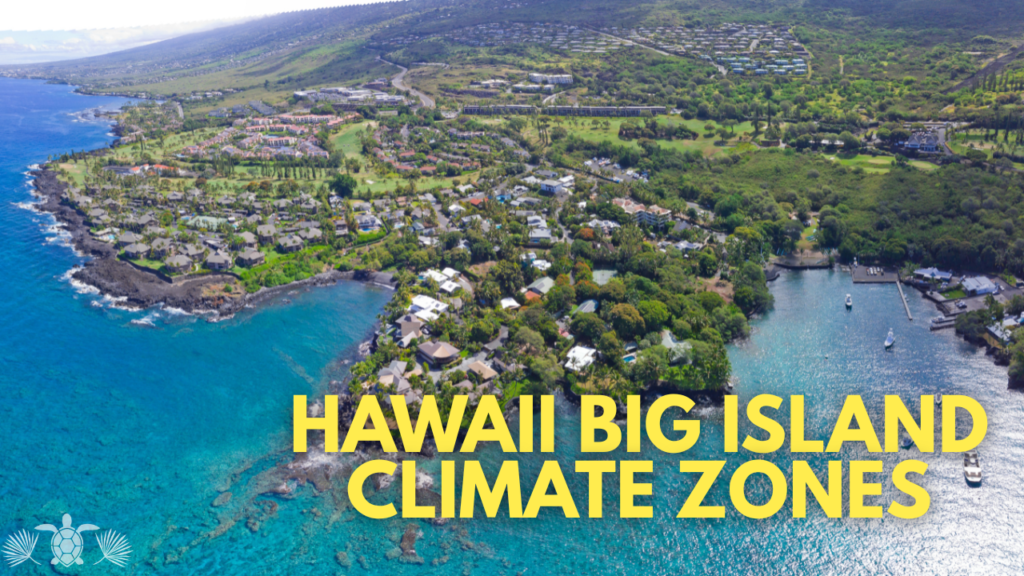
If you’re thinking about buying a home on the Big Island, there’s one factor you may not be expecting to consider: climate zones. Yes, the Hawaii Big Island climate zones are not only real—they’re wildly diverse. And they matter more than you think.
From humid rainforests to dry deserts, the Big Island has 11 of the 13 climate zones found on Earth. This isn’t just a fun fact—it’s a major consideration that affects everything from your home’s durability to your lifestyle.
As a local real estate agent, I help clients navigate this every day. Here’s what you need to know to make the best decision for your Big Island home.

Hawaii Big Island Climate Zones: How Many Are There?
The Big Island of Hawaii is known for its unique geography, but it’s especially famous for its wide-ranging climate zones. According to the Köppen classification, there are:
11 climate zones on the Big Island (out of the planet’s 13 total)
These fall into 4 of the 5 main climate groups: tropical, arid, temperate, and polar.
So when people ask, “How many climate zones are on the Big Island of Hawaii?”, the answer surprises them. The Big Island is home to more climate variation than most entire countries! From the sun-drenched coasts to misty highlands and even snowy peaks, the island is a microcosm of global climates packed into one incredible destination.
Whether you’re in a desert-like area in Kailua-Kona, known for its dry heat and minimal rainfall, the cool uplands of Waimea with green pastures and brisk breezes, or the lush rainforests of Hilo, where frequent rains nourish vibrant vegetation, each zone offers different living conditions—and challenges.
What Defines the Dry (Arid and Semi-Arid) Climate Zones?
Let’s talk about those sun-baked places you’ll find on the Big Island—the dry (arid and semi-arid) climates. Here, the rule of thumb is simple: the land loses more moisture than it gains. In these areas, evaporation outpaces rainfall, meaning water disappears faster than it shows up.
There are two main variations you’ll find:
- Desert (Arid) Zones: Picture landscapes where the ground drinks up any rain in no time flat. These areas experience high temperatures, lots of sunshine, and rainfall that’s rarely enough to keep up. Think classic desert vibes—sparse vegetation, plenty of lava rock, and dramatic coastline. On the Big Island, places like Kua Bay—or anywhere along the leeward coasts—fit this label, with some of the island’s whitest sands and consistently dry weather.
- Steppe (Semi-Arid) Zones: These areas get a touch more rain, but not much. They’re often covered in tough grasses and low shrubs, creating a rugged, almost wild-west feel. Steppe zones are a transition—drier than a rainforest but not quite a barren desert, making for beautiful open spaces, rolling grasslands, and, in some pockets, welcoming groves of kiawe trees.
So, when you venture west or south and notice the stark, open vistas and dry warmth, you’re experiencing the arid and semi-arid climate zones—nature’s reminder that the Big Island is a patchwork of extremes, and that “Hawaiian paradise” doesn’t always mean lush and wet.
Why Does Kailua-Kona Stay So Dry?
There’s a reason Kailua-Kona feels distinctly sunnier and drier than other parts of the Big Island. It all comes down to geography and how the island interacts with the local trade winds. Kailua-Kona sits on the leeward (or western) side of the island—this means it’s shielded by Mauna Loa and Mauna Kea, two massive volcanoes that rise thousands of feet above sea level.
Here’s what happens: most of the moisture-laden trade winds approach from the east. When they collide with the island’s mountains, they’re forced upward, cooling as they rise. This causes them to drop much of their rainfall on the windward (eastern) slopes—places like Hilo benefit from this, regularly basking in abundant showers and lush greenery.
By the time those same winds cross to the west side—where Kailua-Kona is—the air is much drier. The mountains have already wrung out much of the moisture, leaving the leeward coast with plenty of sunshine and only an occasional sprinkle. If you crave golden rays and low humidity, Kailua-Kona delivers, thanks to this “rain shadow” effect created by the towering volcanic peaks.
Limitations of the Köppen Climate Classification for Hawaiʻi
Now, before you start brushing up on your Köppen climate codes, it’s worth noting that, while widely used, this system isn’t perfect—especially when it comes to a place as geographically unique as the Big Island.
First, the Köppen classification is just one among several ways to map out global climates. It’s popular because it’s broad and relatively easy to apply, but it can paint with pretty big brushstrokes, sometimes glossing over finer local variations. Over the years, even the Köppen system itself has evolved and been updated (there’s academic debate about which version to use!), which means different sources may count slightly different numbers of zones.
Adding another wrinkle, the Köppen model works in tiers. There are five main climate groups (occasionally six, if “highland” is separated), which are then divided into a set of 13 primary climate zones. The Big Island is often credited with fitting 11 of these 13, but if you drill down even further, those zones can be split into up to 30 or more subzones—so what you call Waimea or Hilo might have a different name on a more detailed map.
In short, while the Köppen system gives a helpful overview and makes for great trivia, it tends to blur the subtleties that make Hawaiʻi’s local climates so fascinating—and so relevant for choosing your next home. Don’t be surprised if actual conditions on your street differ from what the broader climate label suggests!
Understanding the 13 Köppen Climate Sub-Zones
Since climate zones play such a critical role in where (and how) you’ll live on the Big Island, it helps to understand how the Köppen classification system breaks down its famous “13 sub-zones.” Here’s a quick primer:
Within the five major global climate groups—tropical, dry, temperate, continental, and polar—there are 13 recognized sub-zones, each defined by unique patterns of temperature and rainfall. Let’s walk through each:
- Humid Tropical (3 sub-zones):
- Continuously Wet: Think lush year-round rainfall, no true dry season.
- Monsoon: Shorter dry spell, but the landscape stays green thanks to consistent moisture.
- Dry Tropical: Distinct dry season appears, splitting into either summer-dry or winter-dry patterns.
- Dry Climates (2 sub-zones):
- Desert (Arid): Minimal rainfall—evaporation vastly outweighs precipitation.
- Steppe (Semi-arid): More moisture than deserts but still drier than most; often supports grasslands.
- Temperate Climates (3 sub-zones):
- Winter-Dry: Rain mostly in the warm season, with dry, cooler months (not found on the Big Island).
- Summer-Dry: Rainy, often lush winters followed by dry summers.
- Continuously Wet: Consistent rainfall in all months, with only minor seasonal variations.
- Continental (Cold) Climates (3 sub-zones):
- Winter-Dry: Warm (or hot) summers, but winters are cold and relatively dry (not present in Hawaii).
- Summer-Dry: Short, somewhat wet summers and drier, cold winters (again, not in Hawaii).
- Continuously Wet: Rain falls year-round, but winters get chilly (also absent from the Big Island).
- Polar Climates (2 sub-zones):
- Tundra: Ground remains frozen for much of the year, but a short “warm” season creeps just above freezing.
- Ice Cap: Temperatures rarely, if ever, rise above freezing; perpetual snow and ice.
Each of these sub-zones can shape not only the landscape but your day-to-day life. For example: Hawaii’s Hamakua Coast is a classic “continuously wet humid tropical” area, while the arid stretch around Kua Bay feels like a dry steppe. And for the truly curious, you’ll even find a polar tundra zone at the summit of Mauna Kea!
…And as you journey between them, you’ll notice that the Big Island isn’t just a world apart—it’s nearly every world in one.
Understanding the Numbers: 8, 10, and 13 Climate Zones Explained
If you’ve researched the climate zones of Hawaii, you’ve probably seen a few different numbers floating around—some say there are 8, others 10, and sometimes even 13. So what gives?
Here’s the scoop:
These numbers come from different ways of classifying climates, with the widely used Köppen climate classification system being the gold standard for scientists and geographers.
- 13 climate zones: This refers to the total number of major climate subtypes recognized on Earth according to the Köppen system.
- 10 climate zones: On Big Island-specific maps (often based on research from sources like the Mauna Loa Observatory reports), you’ll sometimes see 10 zones labeled, showcasing the island’s broad range of conditions.
- 8 distinct climate zones: When scientists group similar subtypes together (for example, summer dry and winter dry variants that are functionally very close), they typically count 8 unique Köppen zones on the Big Island.
In short, the different numbers simply reflect how you slice the climate pie. Whether you count subtle variations as their own unique zone or bundle similar ones together, the takeaway is the same: the Big Island has an astonishing range of climates for such a compact area. This diversity is a big reason why picking the right location matters so much when you’re looking for a home here.
How the Köppen Climate Classification Works
So, what exactly are these climate zones, and how are they carved up? The Köppen climate classification scheme—widely used by scientists and weather enthusiasts alike—breaks the world’s climates into an organized system.
At its core, the Köppen system sorts all climates into five main groups:
- Tropical
- Arid
- Temperate
- Cold (sometimes called continental)
- Polar
Each of these groups is then divided further. Those five big buckets split into 13 smaller climate zones, offering a more detailed look at the variety of weather found around the globe. Still not enough? Each of those 13 can be subdivided again, sometimes resulting in nearly 30 specific climate types for the real weather nerds out there.
What makes the Köppen system unique is how it takes into account factors like average temperatures and rainfall patterns across the year. This multi-layered approach means you can pinpoint whether a region, like parts of the Big Island, is considered tropical rain forest, tropical savanna, temperate dry, or something in between.
In Hawaii’s case, you’re witnessing a rare gathering of these major groups and many of their subtypes—packed onto one dramatic volcanic island.
What’s the Climate Like in Kohala and Waimea?
and stand out for their striking green hills and rolling pastures, which aren’t as common elsewhere on the island. Here, the climate can be a study in contrasts. Summers tend to bring warm, sunny days, often perfect for exploring the outdoors or enjoying panoramic mountain views. But come winter, you’ll notice a dramatic shift—expect cooler temperatures and frequent rains, especially in Waimea, which can occasionally feel downright chilly compared to the coast.
This combination of warmth, rain, and elevation creates the lush, ranch-like atmosphere both areas are known for. It’s as if you’ve stepped into the landscapes of the Scottish Highlands, all while being surrounded by classic Hawaiian beauty. So if you’re dreaming of greener pastures (literally) and don’t mind cooler, mistier weather from time to time, Kohala and Waimea might be just what you’re looking for.
Where You’ll Find Polar Climates on the Big Island
If you’re wondering where the Big Island sneaks in a polar climate, look no further than its two iconic peaks: Mauna Kea and Mauna Loa. Both of these volcanoes soar high enough that their summits stay chilly all year—think temperatures below 50°F, even during the summer.
It’s not just about the cold; these lofty altitudes occasionally see snow in winter, offering that rare chance to make a snow angel in Hawaii. The rest of the island might be basking in tropical warmth, but up here, at Hawaii’s roof, it’s a different, much frostier story.
From landscaping choices and home construction materials to lifestyle preferences and even wardrobe needs, the climate zone you choose can significantly influence daily life. That’s why understanding these zones is key when deciding where to live on the Big Island.
A Brief History of Glaciers on Hawaii’s Lofty Peaks
You might be surprised to learn that the Big Island’s peaks aren’t just chilly today—they also have a deep, frosty history. Over the last 300,000 years, Mauna Kea and Mauna Loa have experienced at least four distinct glacial periods. During these eras, their summits were blanketed by actual glaciers, sculpting the volcanic landscape into what you see today. The last time these icy giants covered the mountaintops? Around 9,000 years ago.
So while most of Hawaii radiates tropical sunshine, the tops of Mauna Kea and Mauna Loa have a legacy much closer to Alaska than Waikiki—a fascinating reminder of the extremes you can experience right here on the Big Island.
What About Continental (Cold) Climates?
You might be wondering if the Big Island experiences any of those classic “cold winter” climates you find in places like the Midwest, Canada, or Russia. The answer is a resounding no—and that’s actually pretty great news for most homebuyers here.
Continental climates are known for their dramatic temperature swings: summers can be mild or warm, but winters are reliably chilly or downright frigid. Typically, the coldest months dip well below freezing, and snow isn’t just a rare event—it’s a seasonal expectation. There are also several types within this group, depending on how precipitation is spread throughout the year (think long, snowy winters or wet, cool summers).
But here’s the thing: the Big Island simply doesn’t get cold enough, long enough, to fit the continental bill. Even the cooler uplands and the snowy cap of Mauna Kea don’t spend months below freezing. Instead, island winters are much milder and wetter, with little risk of the deep-freeze conditions you’d find on continental mainlands.
So, if your idea of a “cold climate” involves scraping frost off your windshield or shoveling snow, you definitely won’t find that here—just another reason many find Hawaiʻi’s climate zones so appealing and unique.
What Can Travelers Expect From Big Island Weather Year-Round?
So, what does this impressive climate diversity mean for travelers? In short: you can count on plenty of sunshine—almost anytime you visit. Most areas on the Big Island enjoy reliably warm temperatures year-round, perfect for beach days, snorkeling, or exploring volcanoes.
However, be ready for some local quirks. If you’re planning to base yourself on the east side (think Hilo or its lush surroundings), don’t be surprised if you encounter periodic showers. That’s what keeps the rainforest so green! Meanwhile, higher elevation areas like Waimea or Volcano can turn cool and breezy, especially after sunset. It’s wise to bring a light jacket if your adventures take you upcountry.
But overall, whether you’re a sun-chaser on the Kona Coast or chasing waterfalls in Hilo, you’ll find the Big Island has a spot—and a climate—to fit your ideal Hawaiian experience.
What Are Kailua-Kona’s Yearly Averages for Air Temperature, Rainfall, and Cloudiness?
Curious about what daily life feels like in sunny Kailua-Kona? The climate here is the stuff of vacation brochures—but it’s not just about perpetual blue skies. Here’s how the weather truly plays out over the course of a year:
- Air Temperature: Expect a reliably warm atmosphere throughout the year, with the average temperature hovering around 74.5°F (24.7°C). Even at the height of summer or during the “chilliest” winter months, you’ll rarely see much deviation from those comfortable 70s.
- Rainfall: Despite its tropical latitude, Kailua-Kona is surprisingly dry compared to the lush east side. The area receives about 27 inches of rain annually, usually arriving in gentle, brief showers rather than full-blown downpours. This means most days remain pleasantly dry, perfect for beach outings and morning strolls alike.
- Cloud Frequency: On average, clouds grace the Kailua-Kona sky just over half the time, with about 57% cloud cover through the year. While there are months where the skies are a bit more dramatic—think quick-moving clouds and gorgeous sunsets—you’ll generally encounter plenty of shining sun.
In short, if your dream is to live or vacation where shorts and flip-flops work almost every day of the year, Kailua-Kona absolutely delivers.
When Is Kailua-Kona at Its Sunniest (and Most Overcast)?
If you’re daydreaming about endless rays, you’ll be happy to know that Kailua-Kona shines brightest in the winter. December and January typically bring the most sunshine, with clear skies prevailing and fewer clouds to block those spectacular sunsets—great news if you’re planning a winter escape or just want to soak up all the Vitamin D you can.
On the flip side, Kailua-Kona tends to don its “cloud hat” from April through June. During these late spring and early summer months, overcast conditions are far more common, with the sun hiding behind the clouds much of the day. Still, even on the cloudiest afternoons, you’ll often catch glimpses of blue—and, let’s be honest, a cloudy day in Kona beats a snowy one almost anywhere else.
What Are the Wettest and Driest Months in Kailua-Kona?
If you’re eyeing Kailua-Kona for your home base or vacation, you might wonder when to expect the most (or least) rain. Thanks to Kona’s location on the Big Island’s leeward side, it boasts a famously dry climate—one reason the coast sparkles under so many sun-drenched days.
But “dry” doesn’t mean rain-free! Surprisingly, Kona is unique in Hawaii for having its rainiest stretch in late summer rather than winter. September generally sees the most precipitation, but showers are usually brief and tend to show up in the late afternoon or early evening—rarely an all-day washout.
If your goal is to maximize sunshine, look to December and January, historically the sunniest months with less cloud cover and fewer rain interruptions. On the flip side, April through June tend to be the cloudiest, so if basking in rays is a must, you might want to keep that in mind when planning your visit.
All things considered, occasional rain is part of the Kona experience—but it’s rarely enough to put a damper on your plans.
Why Do Hawaii Big Island Climate Zones Matter for Homebuyers
Buying a home isn’t just about the view or square footage—it’s also about understanding the Hawaii Big Island climate zones and how they affect your investment, comfort, and long-term maintenance costs.
The island’s unique geography creates a wide range of microclimates within relatively short distances. From misty rainforests to dry lava plains and breezy highlands, the climate zone you choose will play a major role in your day-to-day life as a homeowner.
Here are a few practical ways Big Island climate zones directly influence your home experience:

1. Mold, Moisture, and Humidity
In wetter zones like Hilo, where it can rain over 120 inches a year, high humidity means your home is constantly at risk for:
-
Mold in walls, ceilings, and crawlspaces
-
Mildew in closets, bathrooms, and fabric upholstery
-
Warping of wooden floors, cabinetry, and doors
These are common challenges in the humid tropical zones of the island. To mitigate them, it’s essential to use mold-resistant building materials, ensure homes are built with good airflow and cross-ventilation, and install quality dehumidifiers. Buyers in these areas should also consider the long-term maintenance costs of living in a high-moisture environment.

2. Termites and Insect Issues
Termites thrive in warm, moist conditions, which are typical of lower elevation tropical zones like Puna, Hilo, and Keaʻau. If you’re considering a home in these areas, be prepared:
-
Annual termite inspections are a must to catch issues early
-
Pressure-treated wood or steel framing is highly recommended for durability
-
Fumigation or bait stations may need to be part of your ongoing maintenance plan
Termites can cause serious structural damage if left unchecked, so proactive pest management is essential.
Homes For Sale Around Hilo, Puna, and Keaau

3. Salt Air and Oceanfront Homes
In arid coastal zones like Kailua-Kona, the beautiful ocean views come with a hidden cost: salt-laden air that is highly corrosive over time. Homeowners here often face:
-
Rusting metal fixtures, including gates, railings, window screens, and AC units
-
Shortened lifespans for appliances and electronics, especially those exposed to open air
-
Faster deterioration of paint and exterior finishes
If you’re living in Kona Coast climate zones, it’s important to budget for more frequent upkeep, choose corrosion-resistant materials, and schedule regular maintenance to keep your property in top shape.

4. Weeds and Overgrowth in Lush Zones
In fertile, rain-fed areas like Hōnaunau, Volcano, and parts of Hamakua, vegetation grows quickly—and constantly:
-
Invasive weeds can take over landscaping if not managed
-
Regular yard maintenance becomes a weekly necessity
-
It’s easy to get overwhelmed by fast-growing foliage, especially if you’re not living full-time on the property
If you’re a part-time resident, consider hiring a local landscaping service or choosing a property in a lower-maintenance zone to better fit your lifestyle.
Bottom line: Understanding the Hawaii Big Island climate zones helps you choose a home that aligns with your lifestyle, budget, and maintenance expectations. Whether you’re drawn to misty rainforests, breezy pastures, or sunny lava fields, knowing what to expect will help you make a smarter, more sustainable investment in paradise.
Choosing From Hawaii Big Island Climate Zones Based on Your Lifestyle
Each climate zone of the Big Island offers something different. Here’s a quick comparison:
| Climate Zone Type | Area Examples | Pros | Cons |
|---|---|---|---|
| Tropical (Wet) | Hilo, Puna | Lush, green, cool nights | Mold, bugs, constant rain |
| Arid/Semi-Arid | Kailua-Kona, Waikoloa | Sunny, dry, great for solar & pools | Salt corrosion, dusty, limited vegetation |
| Temperate (Upland) | Waimea, Volcano | Cooler temps, great for gardening | Higher heating needs, occasional fog |
| Mixed Zones | Kealakekua, Holualoa | Balance of sun and rain, rich soils | Varies block by block |
Temperate climate zones on the Big Island—such as those found in Waimea and Volcano—stand apart for their cooler average temperatures and unique upland feel. These areas typically see the average temperature of the coldest month ranging from 64°F (18°C) down to around 27°F (-3°C), with summer months always above 50°F (10°C).
A Closer Look at Big Island Climate Zones
Hawaii’s Big Island is a patchwork of climates that would make even a weather enthusiast dizzy. According to the Köppen climate classification, the island boasts 4 out of the 5 major climate zones in the world, and 8 out of 13 sub-zones—a rare feat for such a compact landmass.
Let’s break down the main types you’ll encounter:
Humid Tropical Climates
- Continuously wet: Think Hilo and the Hamakua Coast—lush, green, and rarely a dry day (at least 60 mm of rain even in the driest month).
- Monsoon: Short dry spells, but still plenty of moisture to keep everything vibrant.
- Tropical dry: Noticeable dry season, split into “summer-dry” and “winter-dry” zones. Some months can see rainfall dip below 60 mm.
Example: Hamakua Coast, where waterfalls and rainforests thrive.
Dry (Arid & Semi-Arid) Climates
- Arid (Desert): Areas where evaporation far outweighs rainfall—sunny and stark, perfect for those who love blue skies and dry air.
- Semi-arid (Steppe): Slightly more rain than the true desert, but still dry enough for grasslands rather than jungle.
Example: Kua Bay, known for its powdery sand and clear skies.
Temperate (Upland) Climates
- Summer dry: More rain in the winter, with summers seeing the driest months (less than 30 mm of rain in the driest month).
- Continuously wet: No sharply defined dry season, just steady rainfall year-round.
Example: Volcano Village—a cool, misty area with rainforests that could double as a set for Jurassic Park.
Polar (Tundra) Climate
- Polar tundra: Yes, you read that right! The summits of Mauna Kea and Mauna Loa are cold enough to be classified as polar tundra, with temperatures rarely rising above 50°F (10°C) even in summer.
Why does all this matter?
Whether you’re looking for misty rainforests, sunbaked beaches, or chilly upland meadows, the Big Island has a climate zone to match your mood—and maybe even surprise you with an unexpected patch of snow.
How to Match Your Real Estate Search to Hawaii Big Island Climate Zones
When it comes to buying a home on the Big Island, climate matters just as much as location and layout. The island’s dramatic climate diversity means that what works perfectly for one buyer might not suit another at all.
Whether you’re prioritizing sunshine, cooler temperatures, or lush greenery, here’s how to match your real estate search to the climate zone that best fits your lifestyle:

Want solar panels and lots of sunshine?
Choose the dry, arid zones like Waikoloa or Kona Heavens. These areas are ideal for maximizing solar energy production thanks to their abundant sunshine and minimal cloud cover year-round. Homes here are less affected by mold and moisture, and outdoor living spaces get plenty of use. However, the landscape tends to be more desert-like with fewer large trees and less natural greenery.
Prefer a cool, country feel with gardening potential?
Look in elevated, temperate zones like Waimea or Volcano. These regions offer cooler temperatures, often with misty mornings and afternoon breezes. The soil is rich, making it ideal for gardening, farming, and lush landscaping. It’s perfect for buyers who love open space, fresh air, and a more rural, tranquil lifestyle—though be prepared for cooler nights and the need for a good jacket.
Love tropical greenery and ocean breezes?
Explore the humid zones around Hilo and Puna—where towering palms, colorful flowers, and vibrant plant life are the norm. These areas are perfect for those who crave a jungle-like setting, but they do come with frequent rain and high humidity. That means mold protection, ventilation systems, and moisture-resistant materials should be a top priority when house hunting here. If you’re okay with some extra maintenance, the lush beauty more than makes up for it.
Matching your dream home to the right Big Island climate zone ensures your property not only looks good—but lives well for years to come.
Final Thoughts – How Hawaii Big Island Climate Zones Shape Your Lifestyle
The climate zones of the Big Island Hawaii aren’t just scientific classifications—they affect your daily life, maintenance costs, and long-term satisfaction.
✔️Are you ready to tackle weeds, mold, or termites?
✔️ Do you need sunshine year-round, or prefer cooler weather?
✔️ Will salt exposure bother your upkeep budget?
These are the questions I ask clients before we begin home shopping. Whether you’re a retiree, remote worker, or investor, knowing how Hawaii Big Island climate zones impact your property is key to buying smart.
Need Help Choosing the Right One from Hawaii Big Island Climate Zones for Your Home?
As a local real estate expert with deep knowledge of Hawaii Big Island climate zones, I help clients:
-
Match their lifestyle with the right location
-
Understand maintenance needs by zone
-
Make smarter, longer-lasting investments
Prefer sunshine or rainforest living? Explore available homes in each zone.