
If you’re wondering, “Is it safe to live in Hawaii?”—you’re not alone. Whether you’re thinking about retiring here, relocating your family, or just curious about day-to-day life in Hawaii, safety is a top priority. As someone who lives here and helps people make the move every day, I’m here to break it down like you’re chatting with a local friend who actually knows what’s up.
Let’s get into what makes Hawaii a safe place to live—and what you should be mindful of, especially on the Big Island.
Is Hawaii Safe to Live In Compared to the Mainland?
Generally speaking, Hawaii is a safe place to live. Violent crime is relatively low across the islands when compared to many mainland cities, and there’s a strong sense of community. People look out for one another, especially in the smaller towns and rural areas. You’ll often find neighbors who know your name, offer fruit from their yard, or check in after a big storm.
Of course, no place is perfect. Petty theft, drug-related crimes, and occasional break-ins can happen—just like anywhere else. But if you take basic precautions (lock your doors, don’t leave valuables in your car), you’ll likely find safe Hawaii living is well within reach.
While Hawaii is often imagined as a peaceful tropical paradise, it still faces its share of challenges. The good news: according to the FBI’s most recent data, Hawaii’s overall crime rate is actually lower than the national average. For example, in 2018, the violent crime rate was 2.1 incidents per 1,000 people (compared to 3.7 nationally), and property crime was at 19.6 incidents per 1,000 people (versus 29.1 nationally).
That said, certain issues are more prominent here than others. One of the bigger concerns is drug abuse—particularly the use of crystal methamphetamine, which has contributed to a spike in drug-related crime, including theft and violence. In 2018 alone, there were over 1,000 reported drug abuse violations, with nearly half involving meth.
So, while Hawaii may be safer than much of the mainland, it’s still wise to stay alert and use common sense. With a little care, you can enjoy all the beauty—and peace of mind—these islands have to offer.
- Check weather before you go
Hawaii’s weather can change on a dime. Scan the forecast for storms, heavy surf, or flood advisories, especially if you’re planning a hike or beach day. If in doubt, it’s always better to postpone than risk getting caught in a downpour. - Dress for the sun
The tropical sun means business. Lightweight, long-sleeved shirts, wide-brimmed hats, and sunglasses go a long way in fending off sunburn. And don’t forget to seek shade during the midday UV peak (roughly 11 a.m.–3 p.m.). - Be smart with your stuff
Don’t tempt fate (or thieves) by leaving valuables on the beach, in plain sight in your rental, or unattended at a trailhead. Use your room safe or keep valuables with you. - Swim where there are lifeguards
Hawaii’s waters are beautiful, but rip currents and rogue waves are serious business. Stick to beaches with lifeguards on duty and avoid swimming alone or in remote spots. - Stay in well-lit, populated places after dark
It’s paradise, but common sense still applies. Avoid wandering into isolated areas or poorly lit streets, and if you’re unsure about the neighborhood, ask your hotel staff for advice. - Drive like a local
Island roads can be winding and narrow. Drive defensively, watch for pedestrians and cyclists, and never drink and drive. Put that phone away—whatever it is, it can wait. - Stick to safe drinking water
While much of Hawaii’s tap water is safe, it’s wise to stick with bottled or boiled water in more remote areas, especially for brushing teeth or making ice.
A little preparation goes a long way—so you can focus on soaking up the aloha spirit, not worrying about what could go wrong.
Natural Hazards to Be Mindful of in Hawaii
While Hawaii is a paradise in many ways, it’s important to know about the environmental risks that come with island life. Nature here is both breathtaking and sometimes a bit unpredictable.
First off, Hawaii sits in the middle of the Pacific, which means hurricanes and tropical storms do occasionally threaten the islands. Warning systems are in place and locals take evacuation orders seriously, so it’s wise to keep an eye on weather alerts, especially during hurricane season.
Then there’s Hawaii’s reputation as a volcanic hotspot—literally. Most residents live far from active lava zones, but eruptions and the occasional earthquake do happen. As a resident or visitor, it’s a good idea to know the basics about local emergency procedures, just in case Madame Pele decides she wants to redecorate.
Tsunamis, though rare, are another natural hazard. All of Hawaii’s coastal communities have sirens and practiced evacuation routes. If you hear those sirens, don’t ignore them—it might be time for a quick uphill stroll.
And don’t forget those everyday environmental risks that come with the territory:
- Strong ocean currents and big surf, especially during winter months on north or west shores. Even experienced swimmers can get caught off guard, so locals recommend sticking to beaches with lifeguards, watching for warning flags, and respecting the water.
- Sun exposure is on a whole other level here. A cloudy morning can turn into a sunburned afternoon before you know it. Sunscreen and some shade are your best friends.
- Winding roads and narrow highways mean drivers should take their time—this isn’t the mainland freeway. Watch for sharp turns and, if you’re out after dark, wild chickens and the occasional nene goose.
Taking these precautions allows you to soak in the beauty and joy of island life, all while staying safe and sound.
Is Hawaii Tap Water Safe to Drink?
Yes, in most cases, Hawaii’s tap water is safe and tastes great right from the faucet. The islands benefit from deep, natural aquifers that deliver fresh groundwater, and local water departments routinely test and treat the supply to meet strict EPA standards. So, whether you’re filling up at home or sipping at a café in Honolulu, you’ll usually be enjoying clean, reliable water.
However, it’s still a good idea to use common sense—especially if you’re in an older rural home or somewhere with a rainwater catchment system. These setups might involve old pipes or tanks, which could introduce contaminants like lead or bacteria. If you’re unsure, ask neighbors or your property manager, and consider boiling or treating the water just to be safe.
In short, for most residents and visitors, Hawaii tap water is as good as it gets—but a quick double-check in less conventional spots never hurts.
Is It Safe to Vacation in Hawaii Right Now?
If you’re dreaming of an island getaway, you’ll be happy to know that Hawaii remains a safe destination for travelers. Most visits to the islands are worry-free, with violent crime being rare, especially when compared to many mainland tourist spots. In fact, you’ll likely notice the relaxed vibe throughout Hawaii, thanks in large part to its tight-knit communities and that classic aloha spirit.
That said, it’s wise to keep your street smarts handy as you explore the islands. The most common issues faced by visitors are typically minor—things like petty theft or the occasional pickpocketing incident, especially in heavily touristed areas or if valuables are left unattended on the beach. Just follow the basics you’d use anywhere:
- Keep your belongings secure and out of sight,
- Don’t leave valuables in your rental car,
- Stay aware of your surroundings in busy spots.
Hawaii’s unique geography—being tucked away in the middle of the Pacific—means there aren’t the same dense urban centers you might find elsewhere, reducing many big-city crime concerns. Local residents tend to watch out for each other and, more often than not, will lend a helping hand or a friendly tip to keep you safe. So, with a little common sense, you can relax and soak up all the beauty Hawaii has to offer.
Who’s Drawn to the Big Island—And What Folks Often Get Wrong About Safety
People eye the Big Island for all sorts of reasons. It’s a magnet for those seeking wide-open spaces, stunning lava landscapes, and a tight-knit community vibe. Some are retirees looking for a slower pace with a view that never gets old. Families come dreaming of backyard fruit trees and year-round sunshine. And of course, adventurers and nature-lovers are always showing up, eager to snorkel, hike, and soak up life far from the typical tourist trail.
One misconception I hear all the time? That the Big Island is either wild and dangerous or, on the flip side, some kind of crime-free paradise. The truth is squarely in-between. Like anywhere with visitors and locals mingling, there are pockets where you need to use the same street smarts you’d bring to any destination—lock your car, keep gear out of sight, and don’t treat your beach blanket like a safe deposit box. But the narrative that the Big Island is uniquely risky or, conversely, totally insulated from crime doesn’t line up with day-to-day reality.
What often gets missed is just how much the slower, more spread-out pace here actually works in your favor. With a smaller population spread over a huge island, there’s a natural buffer against some of the crowded-city problems you’ll find on Oahu or Maui. People really do look out for their neighbors, and many towns on the Big Island consistently rank among the safest in the state.
Add in a little proactive planning and local know-how, and you’ll see why so many people not only visit but decide to call this island home.
Why Are Crime Rates Lower on the Big Island?
One reason the Big Island often reports lower crime rates than Oahu or Maui comes down to its unique geography and demographics. With a much larger land area but a relatively small population, the Big Island’s communities are more spread out, reducing the opportunities for crime that typically cluster in densely populated areas.
In contrast, destinations like Oahu and Maui draw larger numbers of tourists and residents, leading to busier towns and, naturally, greater challenges for local law enforcement. The Big Island’s quieter pace—along with its strong sense of community—can help foster safer neighborhoods, which is something residents truly value.
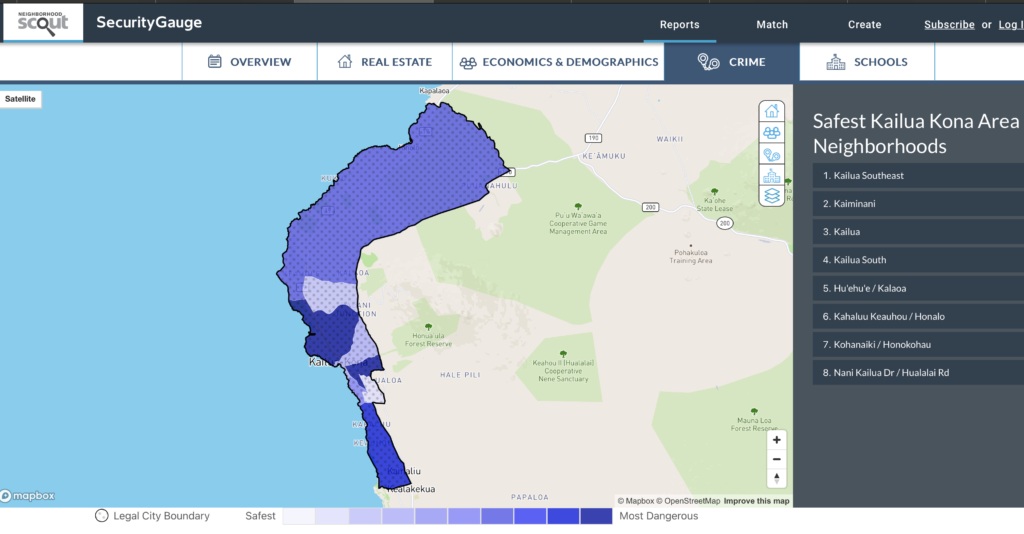
Crime Rates in Kailua-Kona
Crime statistics offer valuable insights into community safety. According to NeighborhoodScout, Kailua-Kona has a crime rate of 17 per 1,000 residents. This indicates a 1 in 59 chance of becoming a victim of either violent or property crime, which is higher than the national average. Violent crimes occur at a rate of 2 per 1,000 inhabitants, aligning with the national average. Property crimes, including motor vehicle theft, arson, larceny, and burglary, are more prevalent, with a rate of 15 per 1,000 residents.
What Are the Bad Areas of the Big Island to Live In?
Let’s be honest, you probably typed “bad areas of the Big Island to live in” into Google. Here’s the honest take:
Every island, including the Big Island, has pockets that are less desirable, often due to higher crime, drug activity, or lack of infrastructure.
A few areas people often ask about:
-
Puna District (certain parts like Pahoa Town): Some parts are affordable but have higher reports of property crime. Still, there are families, off-grid enthusiasts, and long-time locals who love the area.
-
Ocean View: Very affordable and spacious, but remote and limited services. You’ll need to be self-reliant.
-
Parts of Hilo: Like any city, Hilo has neighborhoods with higher crime rates. It’s not unsafe overall, but it’s smart to research by street.
Does that mean you should avoid these areas entirely? Not necessarily. Many people live happily in them—but you need to visit, ask locals, and talk with a realtor who knows the nuances of each neighborhood.
It’s worth noting this isn’t unique to the Big Island. Oahu—the most populated Hawaiian island—also has neighborhoods around Honolulu and other urban spots where you’ll find higher crime and challenges related to homelessness. However, just as on the Big Island, there are plenty of safe and welcoming communities, like Kailua, Kaneohe, and the North Shore on Oahu, where residents enjoy a strong sense of community and overall safety.
Bottom line: Every island has its “rougher” patches, but with some research and local insight, you’ll find there’s a place for just about everyone—whether you’re drawn to affordability, a tight-knit community, or the quiet of the countryside.
Is the Drinking Water Safe in Rural Areas or Older Homes?
If you’re house hunting in rural parts of Hawaii or considering an older property, let’s chat about water safety—because nobody wants unexpected surprises from their tap.
In most larger towns, municipal water is filtered, disinfected, and regularly tested to meet strict EPA standards. You can trust what comes out of the faucet in places like Kailua-Kona, Hilo, or Waimea.
But out in the country or in vintage plantation-style homes, it gets a bit trickier. Some older buildings may have pipes that are past their prime, meaning possible lead or bacteria issues (especially if the plumbing hasn’t been upgraded since, say, Don Ho was topping the charts). Always check before you drink—sometimes a simple water test is all you need for peace of mind.
Additionally, a lot of rural properties use rainwater catchment systems. If you’re picturing rain barrels and rooftop tanks, you’re spot on. These systems can work well, but they do require regular maintenance—if neglected, things like bacteria, algae, or even little critters can sneak in. If your future home relies on catchment, make sure the water is properly filtered and disinfected before drinking. When in doubt, boil or treat the water.
Long story short? In most developed areas, no worries. In rural or off-grid spots, do your homework and ask questions—it’s better to be cautious (and hydrated) than sorry.
Where to Live in Hawaii if Safety Is Your Top Concern
If you’re looking for safe places to live in Hawaii, especially as a retiree or someone with a family, here are a few spots that consistently get high marks from crime report websites:
-
Waimea (Big Island): Clean, tight-knit, and has a low crime rate.
-
Kailua-Kona (Big Island): More touristy with low crime rate, and lots of amenities.
-
Kapaa (Kauai) and Kihei (Maui): Good infrastructure and low violent crime.
-
East Honolulu (Oahu): One of the lowest crime metro areas with excellent schools.
These areas often come with a higher price tag, but many buyers find the peace of mind well worth it.
If you’re curious about the overall safest Hawaiian islands, Maui, Oahu, Kauai, Lanai, and Molokai are generally considered the front-runners. These islands are known for their low crime rates and tight-knit, often isolated communities. However, it’s smart to keep in mind that, just like on the mainland, even the “safest” island will have some less desirable neighborhoods—usually pockets within the bigger towns or cities. To stay on the safe side, it’s best to avoid poorer or high-crime areas in major cities, do your research by street or neighborhood, and always talk to locals or a knowledgeable real estate agent before making any decisions.
Characteristics and Crime Rates in Captain Cook
Situated along the west coast just south of Kailua-Kona, Captain Cook is a small and inviting community with approximately 3,300 residents. The town offers a rural, tropical feel—with dense vegetation, sweeping ocean vistas, and an abundance of renowned coffee farms thanks to its elevated terrain and favorable climate.
When it comes to safety, Captain Cook stands out. According to AreaVibes, both property and violent crime rates here are below the national average, earning Captain Cook an overall crime score of A-. The peaceful atmosphere means residents tend to feel secure whether exploring downtown’s selection of restaurants, shopping options, or the celebrated monthly farmers market.
The community’s character is marked by its relaxed lifestyle and notable diversity. The population is ethnically varied, with significant White, Asian, and Hispanic representation. Life in Captain Cook moves at a slower pace, drawing outdoor enthusiasts and fostering a neighborly spirit that’s felt throughout the area.
Waikoloa Village: Safety and Community Features
Waikoloa Village, situated about 35 minutes north of Kona on the Big Island’s western side, offers a distinctive blend of comfort and safety amid its arid surroundings. Home to roughly 7,200 residents, this community is often recognized for maintaining a crime rate below the national average in both property and violent offenses. According to AreaVibes, Waikoloa Village receives a crime score of B-, reflecting its reputation as one of the safer areas in Hawaii. It’s worth noting that comparisons may sometimes conflate Waikoloa Village with its namesake on Oʻahu, so data should be interpreted with care.
Climate and Atmosphere
Known for its warm, sunny days, Waikoloa Village experiences less rainfall than many other Big Island towns, thanks to its unique topography. Here, the ever-present trade winds offer a welcome respite during hotter months—so much so that residents affectionately refer to the area as “Waikobloa” for its breezy character.
Community & Amenities
Diversity is a hallmark of Waikoloa Village, with a rich mix of residents from various backgrounds, predominantly White and Asian. The area boasts an inviting, neighborly spirit—the fabled Aloha Spirit is alive and well, making it a welcoming spot for people of all ages. Families benefit from local elementary and middle schools, enhancing its appeal for long-term residents.
Waikoloa Village is also praised for its variety of amenities, from shops and boutiques to restaurants and golf courses. Its proximity to scenic white sand beaches further adds to the allure, especially for those seeking relaxed island living away from the busier resort zones. Despite being occasionally overlooked in favor of the more famous Waikoloa Beach Resort, Waikoloa Village is considered a hidden gem by those in the know.
Honokaa: Community Overview and Safety
Located on the island’s scenic northeast coast just north of Hilo, Honokaa is a small towns with a population of roughly 2,700 residents. Its nautical roots are reflected in historic areas that border the ocean, creating a distinctly charming setting that draws both locals and visitors. The area’s relaxed, tropical feel and easy access to waterfront activities make it an appealing option for those seeking a quieter pace of life.
Honokaa stands out for its lower-than-average crime rates. According to AreaVibes, the town receives an A overall crime rating, with incidents of both violent and property crime below national figures. This makes Honokaa one of the safer choices on the Big Island, particularly for those prioritizing community safety.
The town is notably diverse and maintains a somewhat rural feel, dotted with small farms and ranches. However, residents should be prepared for a daily commute—major employers are absent, so traveling 30 to 40 minutes to work is common.
Honokaa benefits from a consistent tropical climate, but its position on the windward side means frequent rainfall. Ultimately, Honokaa offers a blend of peaceful living, ethnic diversity, and reassuring safety statistics, ideal for those in search of tranquility with a touch of island history.
Tips for Moving to Hawaii Safely
If you want to move to Hawaii and prioritize safety, here are a few quick tips:
-
Visit first and spend time in the neighborhood you’re considering.
-
Talk to locals and neighbors. The best insights come from people who live there.
-
Use local real estate agents who can give you the real story (like me!).
-
Research property crime data street-by-street. It matters more than town-wide stats.
But don’t stop there—here are some practical safety habits that will serve you well whether you’re new to the islands or just scoping out your future home:
Pay Attention to the Weather
Hawaii’s beauty can be matched by its unpredictability. Always check local weather reports for surf advisories, flash flood warnings, or approaching storms before heading out. If the forecast looks dicey, reschedule your plans and give yourself extra travel time.
Sun Safety Is No Joke
The tropical sun is strong. Protect yourself by wearing lightweight, long-sleeved shirts, wide-brimmed hats, sunglasses, and reef-safe sunscreen. Aim to do outdoor activities earlier or later in the day—UV rays are fiercest between 11 a.m. and 3 p.m.
Keep Your Stuff Secure
Petty theft can happen even in paradise. Never leave valuables unattended at the beach or in your car (especially rental cars—those are prime targets). Hawaii’s laid-back atmosphere can lull even the savviest traveler or new resident into letting their guard down, but property crime is a reality here—just as it is in any tourist destination. Opportunistic thieves often single out visitors, so don’t make yourself an easy target. Always lock your vehicle, keep valuables out of sight (better yet, don’t bring them at all), and avoid leaving anything tempting behind, even for a quick swim or hike. A little caution goes a long way toward keeping your Hawaiian experience stress-free.
Swim Smart
Stick to lifeguarded beaches, especially if you’re not familiar with ocean conditions. Rip currents and rogue waves are real hazards. Locals know which spots are safest, so don’t be shy about asking for tips.
Be Streetwise
After dark, stay in well-lit, populated areas and avoid wandering alone in unfamiliar neighborhoods. Your hotel or neighbors can clue you in about which spots to avoid.
Follow the Rules of the Road
Island driving is casual—but that doesn’t mean careless. Drive defensively, watch for cyclists and pedestrians, and don’t rush. And of course, never drive after drinking or while distracted.
Drink Safe Water
While most tap water in Hawaii is safe, if you’re exploring rural or remote areas, opt for bottled or filtered water just to be sure—especially for brushing teeth or making ice.
Moving to Hawaii is a dream, and with a bit of local know-how and these safety tips, you’ll feel right at home—while keeping yourself and your belongings secure.
Preparing for Emergencies and Natural Disasters in Hawaii
Living—or even vacationing—on these spectacular islands means getting acquainted with a few safety basics. Hawaii’s ancient volcanoes and wild weather might be part of its charm, but they also demand a bit of preparation, whether you’re just arriving or you’ve got your toes in the sand already.
If you’re a visitor, here’s how to be smart (and stay safe):
- Stay Alert to Local News and Alerts: Download apps like FEMA or sign up for county alerts. Local stations like Hawaii News Now provide up-to-the-minute info on weather, natural disasters, or road closures.
- Know the Hazards Before You Go: Each island has its quirks. Wildfire risk in drier areas, tsunamis along the coast, or volcanic fumes (vog) on the Big Island. Do a quick scan for local hazards by area—your hotel or Airbnb host should have tips.
- Have an Emergency Plan: Check evacuation routes posted in hotels or vacation rentals. Make a mental note of higher ground if you’re near the shore—tsunami routes are signposted everywhere. If you’re out adventuring, let someone know where you’re hiking or snorkeling.
- Pack with the Islands in Mind: Take along extra water, non-perishable snacks, a flashlight, a portable phone charger, pajamas that double as “leave-in-a-hurry attire”… okay, that last part is optional, but you get the idea. Be ready for brief power outages or road closures.
- Respect Warning Signs and Lifeguards: This goes for beaches, hiking trails, and lava zones—if there’s a posted warning, it’s not just a suggestion.
- Double-Check the Weather and Surf: Sites like the National Weather Service or apps like Surfline give real-time updates. If a storm is inbound, plan to hunker down or adjust your schedule.
Ultimately, a bit of preparation goes a long way. Hawaiian communities are strong and used to working together when storms roll in or Pele gets restless. If you stay tuned in and follow the basics, you’ll not only keep safe—you’ll blend right in as a thoughtful guest.
What’s It Like Living in Hawaii Day to Day?
So, really, is Hawaii safe to live in?
Yes—but just like anywhere else, it depends where you go and how you live. Most people who live in Hawaii describe it as peaceful, beautiful, and slower-paced. Yes, there’s a higher cost of living. Yes, there are areas with more crime. But overall, people move here for a reason—and stay because it truly feels like home.
And if you’re still thinking, “I want to move to Hawaii”, just know this: It’s a tight-knit, respectful community. If you’re kind, engaged, and conscious of your surroundings, living in Hawaii can be one of the most fulfilling choices you’ll ever make.
Is Life in Hawaii Isolated—or Perfectly Positioned?
Ask anyone who’s daydreamed about moving to Hawaii, and you’ll hear it sooner or later: “But isn’t it, you know, kind of… isolated?” Sure, you’re surrounded by the world’s biggest ocean, and a jog to the nearest mainland means a solid five-hour flight. But for many residents, that “middle of nowhere” feeling is less about being cut off, and more about being perfectly nestled between worlds.
In daily life, Hawaii draws from its unique place on the map. Yes, your friends and family on the mainland might joke about needing a passport to visit you (nope, still the U.S.!), but you’ll quickly realize that the islands are a launchpad as much as a destination.
A Gateway to the Asia-Pacific
If you’ve ever had a yen for adventures beyond the horizon, Hawaii’s location is quietly brilliant. Direct flights whisk you off to Tokyo, Seoul, Manila, Sydney, and even further afield across the Pacific. Instead of marathon layovers and lost travel days, you might find yourself sipping miso soup in Japan or eating halo-halo in the Philippines with less fuss than you’d expect coming from the East Coast. And Honolulu International Airport (HNL) plays host to an array of airlines linking you to cultures, cuisines, and experiences across the region.
Island-Hopping, Hawaii Style
But you don’t have to set your sights on far-off countries to shake things up. Living in Hawaiʻi means all the islands are at your fingertips. Picture spontaneous weekend getaways—maybe sunrise on Haleakalā (Maui), a food-truck crawl on Oʻahu’s North Shore, or hiking the wild cliffs of Kauaʻi. Interisland flights are brief, frequent, and often pleasantly affordable (keep an eye out for those flash sales—they’re real!). That “How much can we squeeze into one trip?” urgency melts away. Here, you explore at your own pace.
The Upshot?
So, does Hawaiʻi feel isolated? Only if you want it to. More often, residents find themselves at the crossroads of cultures, with the Pacific as both a playground and a passageway. Whether you’re craving a new stamp in your passport or just a different view out your window, the islands offer a surprising amount of access—and a world of possibilities within easy reach.
Why Some People Feel “Island Fever” in Hawaii
Now, there’s something locals call “island fever”—and it’s not a myth. Hawaii sits over 2,500 miles from the mainland U.S., which means hopping on a plane for a spontaneous getaway is neither quick nor cheap. A flight to anywhere outside the islands usually means at least five hours in the air and, unless you snag a deal, several hundred dollars out of your pocket.
For many transplants, it’s the sense of being surrounded by ocean—and only ocean—that sneaks up on you. If you’re used to road trips, weekend getaways by car, or the endless variety of neighboring states, the reality of true island living can feel a little confining. You might notice it most after your first long stretch here: the urge for a change of scenery, or just the simple novelty of a cross-country drive, is trickier to scratch.
Still, most longtime residents find their groove by embracing local adventures—exploring a new island, venturing into untapped hiking trails, or enjoying quiet weekends by the sea. That said, if you’re craving the energy of a big city or the ability to visit family at a moment’s notice, it’s worth thinking about how you’ll cope with a little more distance and a little less mainland spontaneity.
Final Thoughts: Is It Safe to Live in Hawaii?
If you’re still wondering, “Is Hawaii a safe place to live?” the answer is yes—with context.
Do your research. Work with a local expert. Choose a neighborhood that matches your lifestyle and comfort level. And don’t let fear steer you away from paradise. Every island has areas you’ll want to avoid—and others that will feel like the safe haven you’ve been searching for.
Whether you’re relocating solo, with a family, or planning to retire, I’d love to help you find the right fit.
Explore neighborhoods that match your lifestyle — see listings in Waikoloa, Waimea, and Kona.
Let’s talk story and make your move to Hawaii the smart—and safe—one.
Relevant Blogs
How much does it cost to live in Hawaii?